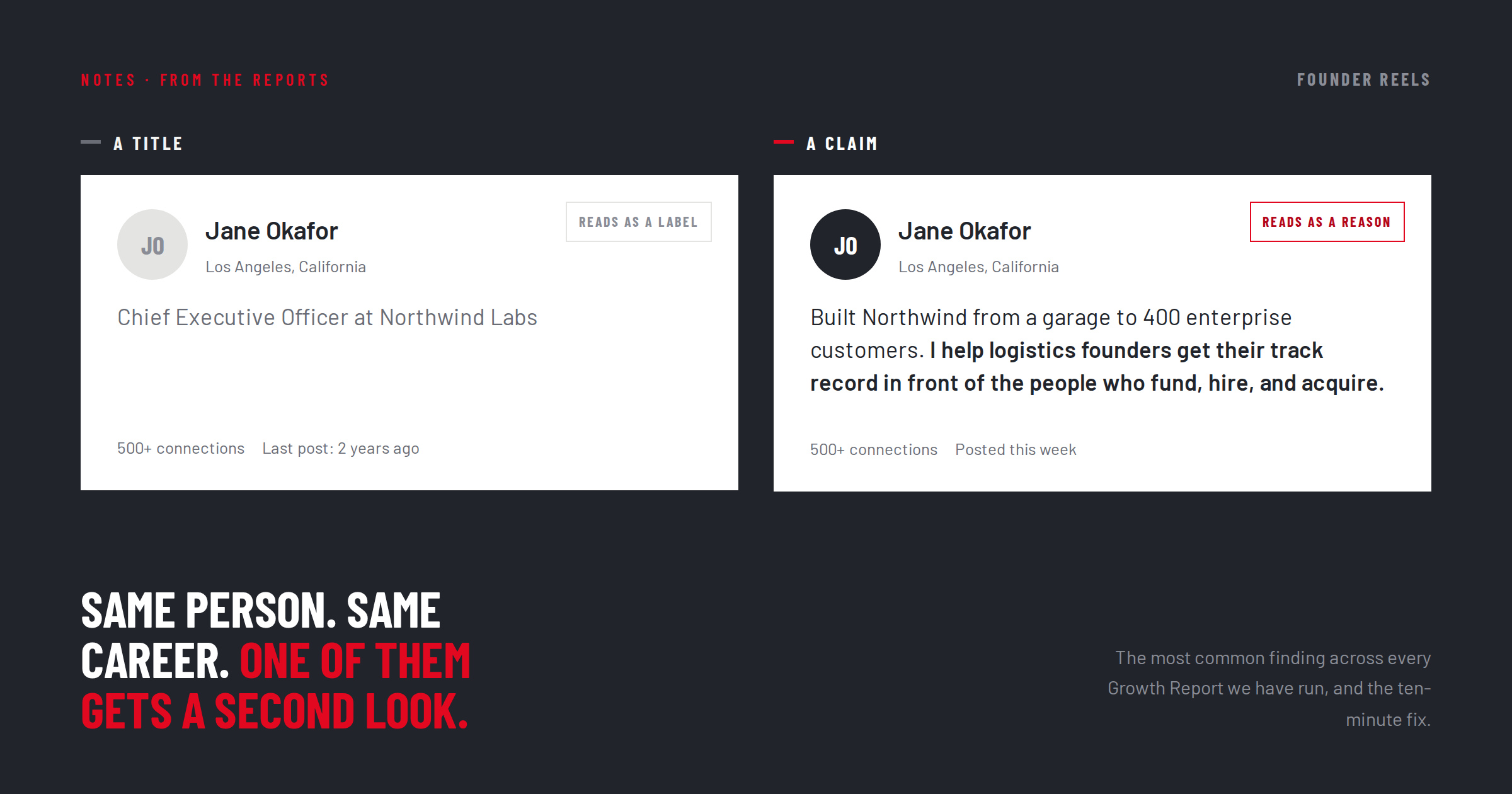
We have now run the Growth Report on enough founders and executives that the patterns are no longer anecdotes. This is the first one, and it is the one that shows up most. The LinkedIn headline says what the person is. It does not say who they help or what happens when they get involved.
"CEO at Northwind Labs." "VP Operations." "Founder." Accurate, every time. And in every case the reader learns nothing they could not have learned from the company name sitting next to it.
Why it costs more than it looks
The headline is not a label. It is the one line that follows you everywhere on the platform. It sits under your name in search results, in comments, in connection requests, in the sidebar of every post you write. It is read far more often than your profile, by people who will never click through.
That means the headline is doing your introduction hundreds of times a week to people who have not decided whether you are worth a second look. A job title makes that introduction as forgettable as possible. It tells them where you sit. It gives them no reason to care.
The cost is invisible because it never registers as a loss. Nobody emails to say they scrolled past you. The referral that was never made does not send a notification. It just shows up as an inbox that is quieter than your track record says it should be.
What the strong ones do
In every report where the Clarity score comes in at seven or above, the headline does three things in one line.
- It names who the person works with, specifically enough that the right reader recognises themselves
- It names what changes when that person is involved, in plain terms rather than adjectives
- It carries one piece of proof, a number or a name, so the claim is not just asserted
The order matters less than the presence of all three. "Operator behind six consumer brands. I help founders get their track record in front of the people who fund, hire, and acquire." That is a claim. It has an audience, an outcome, and evidence. It is also, not coincidentally, roughly the shape of every headline we write inside the report.
The ten-minute fix
Write down who you actually want to hear from. Not everyone. The three or four types of person whose attention changes your year. Then write one sentence that tells that person what you do for them, and one fact that makes the sentence believable.
Put it in the headline field. Do not announce it. Do not post about the change. It goes in tonight, and the next person who searches your name finds a claim instead of a title.
Most people never make this change, not because it is hard, but because nobody ever needed them to explain themselves in public before. Their title did it for them. It still does, right up until the day the title is not there.